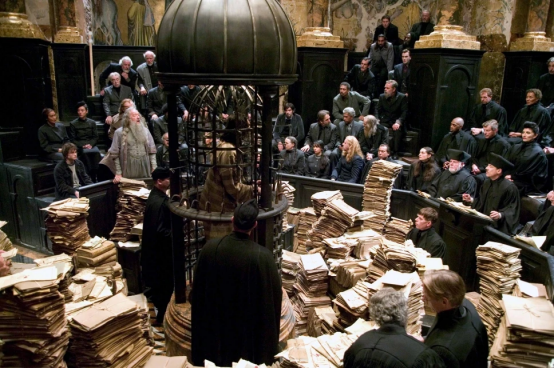
The Wizarding World exists as a vibrant, clandestine society, concealed from the eyes of non-magical people (known as Muggles). It is a realm defined by ancient traditions, complex power structures, and a history fraught with conflict and progress. Understanding this world requires a deep dive into its foundational pillars: its historical evolution, its system of governance and law, and the intricate social fabric that dictates the lives of witches and wizards. From the establishment of the Ministry of Magic to the ideological battles over blood purity, every element is interconnected, creating a rich and detailed tapestry of magical civilization.
This guide will explore the complete timeline and structure of the Wizarding World, from the ancient wars that necessitated secrecy to the founding of its most prestigious educational institution, Hogwarts. We will dissect the inner workings of its government, analyze the tensions between different social classes, and examine the dark chapters written by figures like Gellert Grindelwald and Lord Voldemort, whose actions forever altered the course of magical history.
The Dawn of Wizarding History: From Ancient Wars to Secrecy
The history of the Wizarding World is long and storied, marked by periods of open magic, intense persecution, and eventual strategic withdrawal from the non-magical world. These formative eras established the core tenets of modern wizarding society, including its most important laws and institutions.
The Ancient Era and the Rise of Magical Communities
In ancient times, wizards and Muggles coexisted, though their relationship was often fraught with fear and misunderstanding. Magical abilities were not always hidden, leading to both reverence and persecution. This period saw the rise of powerful, isolated magical communities where knowledge was shared and magical theory was developed. However, the increasing frequency of witch hunts and the growing divide between the two worlds made it clear that a new approach was necessary for survival. The constant threat from Muggles who feared what they could not understand forced the wizarding leadership to consider a drastic, world-altering solution.
A Turning Point: The International Statute of Secrecy
The pivotal moment in wizard-Muggle relations was the implementation of the International Statute of Secrecy in 1689. This global law was enacted by the International Confederation of Wizards to conceal the existence of the magical world from Muggles. The statute made it illegal for any witch or wizard to perform magic in the presence of a Muggle or in a manner that would draw Muggle attention. This act fundamentally reshaped wizarding life, creating a parallel society with its own government, economy, and culture, all operating under a veil of secrecy. The responsibility for enforcing this statute fell to the governing bodies of each nation, such as the British Ministry of Magic.
The Founding of Hogwarts: A Bastion of Magical Education
Long before the Statute of Secrecy, around the 10th century, four of the greatest witches and wizards of the age came together to create a safe haven for magical learning: Hogwarts School of Witchcraft and Wizardry. The four founders were:
- Godric Gryffindor: Valued courage, bravery, and determination.
- Helga Hufflepuff: Valued hard work, loyalty, and fairness.
- Rowena Ravenclaw: Valued intelligence, wit, and wisdom.
- Salazar Slytherin: Valued ambition, cunning, and pure-blood lineage.
While united in their goal to educate young magic-users, a fundamental disagreement arose between Salazar Slytherin and the other three founders. Slytherin believed that magical education should be restricted to those of pure-blood descent, a prejudice that ultimately led him to leave the school. This ideological conflict planted the seeds of the blood-purity obsession that would plague wizarding society for centuries to come. Despite this, Hogwarts became the premier magical institution in Britain, a symbol of magical heritage and knowledge.

The Structure of Power: Governance and Law in the Wizarding World
To maintain order and enforce the Statute of Secrecy, the Wizarding World established a sophisticated system of governance and law. In Great Britain, this power is centralized within the Ministry of Magic, which oversees all aspects of magical life, from law enforcement to international relations.
The Ministry of Magic: The Central Governing Body
The Ministry of Magic is the main governmental authority for the magical community of Great Britain. It is a vast and complex bureaucracy with numerous departments, each responsible for a specific area of wizarding life. Its primary mission is to prevent Muggles from learning about the existence of magic. The Ministry is led by the Minister for Magic, an elected official who serves as the head of the wizarding community.
Key departments within the Ministry include:
- The Department of Magical Law Enforcement: Perhaps the most critical department, it is responsible for the enforcement of all magical laws. It houses the Auror Office, the Wizengamot Administration Services, and the Improper Use of Magic Office.
- The Department of International Magical Cooperation: Manages diplomatic relations with other wizarding governments and sets standards for international trade and travel.
- The Department for the Regulation and Control of Magical Creatures: Oversees the welfare and management of all magical beasts, beings, and spirits.
- The Department of Mysteries: A highly secretive department that conducts research into the most profound mysteries of magic, such as death, time, and love.
The Wizengamot: The High Court of Wizarding Law
The Wizengamot serves as the wizarding high court of law and parliament. It is a council of approximately fifty members, composed of the most respected and, often, the most ancient and powerful figures in the wizarding community. The Wizengamot presides over the most serious legal cases, such as those involving the use of Unforgivable Curses or high treason. The Chief Warlock or Witch of the Wizengamot leads the proceedings. Trials are formal, with the accused brought before the full council to face judgment. The court has the authority to hand down the most severe sentences, including life imprisonment in the fortress of Azkaban.
The Judicial Process and Law Enforcement
The judicial process begins with the enforcement arm of the Ministry, primarily the Aurors. Aurors are elite, highly trained dark-wizard catchers who investigate crimes related to the Dark Arts. Once a suspect is apprehended, they may be held for questioning before being brought to trial. For less severe crimes, smaller tribunals or Ministry officials may issue judgments. However, for major offenses, a full Wizengamot trial is required. The system is not without its flaws; during times of crisis, justice can be swift and sometimes overlooks due process, as seen during the wars against Voldemort when suspects were sometimes sent to Azkaban without a proper trial.

Social Hierarchy and Blood Status: The Fabric of Wizarding Society
Wizarding society is deeply stratified, with social standing heavily influenced by ancestry and bloodline. This obsession with “blood purity” has been a source of conflict and prejudice for centuries, shaping politics, relationships, and personal destinies.
The Ideology of Blood Purity: Pure-Blood, Half-Blood, and Muggle-born
The concept of blood status is a central, and often toxic, element of the wizarding social structure. It categorizes individuals based on their magical lineage:
- Pure-blood: Witches and wizards with no known Muggle or Muggle-born ancestors. Many ancient families, such as the Malfoys and the Blacks, take immense pride in their pure-blood status, viewing it as a mark of superiority.
- Half-blood: The most common blood status, referring to individuals with both magical and Muggle ancestry. This can range from having one Muggle parent to having more distant Muggle relatives.
- Muggle-born: A witch or wizard born to two non-magical parents. Their magical ability appears spontaneously. They often face significant prejudice from blood purists, who use derogatory terms like “Mudblood” to demean them.
This hierarchy is not officially recognized by law but is a powerful social force. Extremist pure-blood families have long argued for the subjugation of those with “lesser” blood, an ideology that forms the core of the political movements led by Dark Wizards.
The Influence of Nobility and Ancient Families
Certain pure-blood families, often referred to as the “Sacred Twenty-Eight,” hold significant wealth, political influence, and social prestige. These families have maintained their status for generations, often intermarrying to preserve their bloodlines. Their influence can be seen within the Ministry of Magic and the Wizengamot, where their wealth and connections allow them to shape policy and evade justice. Their ancestral homes are often filled with magical artifacts and dark secrets, and their names command respect or fear throughout the community.
The Clash of Two Worlds: Wizards and Muggles
The relationship between the wizarding and Muggle worlds is one of strict separation enforced by the Statute of Secrecy. While the Ministry works to hide magic, the underlying attitudes towards Muggles vary widely. Some wizards are curious and respectful, while others, particularly blood purists, view Muggles with contempt and disdain. This tension is a constant undercurrent in wizarding society. The fear of discovery is ever-present, but so is the ideological debate about whether wizards should remain hidden or rule over their non-magical counterparts, a belief championed by Dark Wizards throughout history.

A Century of Conflict: The Rise of Dark Wizards and Global Wars
The 20th century was a period of unprecedented turmoil for the Wizarding World, defined by the rise of two of the most dangerous Dark Wizards in history. These conflicts were not just battles of magic but ideological wars that tested the very foundations of wizarding society.
The Global Wizarding War: Gellert Grindelwald’s Reign
In the early 20th century, Gellert Grindelwald launched a campaign across Europe to end the International Statute of Secrecy and establish a global benevolent hegemony of wizards over Muggles. Operating under the slogan “For the Greater Good,” he argued that wizards were superior and that their rule would ultimately benefit all of humanity. Grindelwald was a charismatic and exceptionally powerful wizard, capable of swaying huge crowds to his cause. His war was not one of senseless destruction but of calculated political revolution, and he gathered a massive following of acolytes who shared his vision. His reign of terror plunged the European magical community into a devastating war.
The Complex Relationship of Dumbledore and Grindelwald
Grindelwald’s rise was complicated by his past relationship with Albus Dumbledore. In their youth, the two were brilliant friends who shared the dream of a wizard-led world. They were intellectual and magical equals, bound by a deep personal connection. However, a tragic three-way duel involving Albus’s brother, Aberforth, resulted in the death of their sister, Ariana, and shattered their friendship. For years, Dumbledore avoided confronting his former friend, partly out of fear of learning who cast the fatal spell and partly due to their shared history. He was eventually forced to intervene as Grindelwald’s power grew uncontrollable, leading to their legendary duel in 1945, where Dumbledore emerged victorious.
The Aftermath and the Rise of Lord Voldemort
The defeat of Grindelwald brought a period of relative peace, but the ideological wounds remained. The prejudice against Muggles and Muggle-borns that Grindelwald exploited did not disappear. This simmering resentment created fertile ground for the rise of the next great Dark Lord: Tom Riddle, who would become known as Lord Voldemort. Unlike Grindelwald’s political goals, Voldemort’s ambitions were rooted in personal immortality and the outright subjugation and murder of those he deemed unworthy, particularly Muggle-borns. His two reigns of terror, known as the First and Second Wizarding Wars, brought the British wizarding community to its knees, characterized by fear, guerrilla warfare, and infiltration of the Ministry of Magic itself.
Frequently Asked Questions (FAQ)
- What is the International Statute of Secrecy?
- The International Statute of Secrecy is a global wizarding law enacted in 1689. Its primary purpose is to conceal the existence of magic, magical creatures, and the wizarding community from the non-magical world (Muggles). It makes it a serious offense for witches or wizards to perform magic in a way that might be seen by Muggles, and national governments like the Ministry of Magic are responsible for enforcing it.
- How is the Ministry of Magic structured?
- The Ministry of Magic is the central governing body for the British magical community, led by the Minister for Magic. It is organized into several departments, each with specific responsibilities. The most prominent is the Department of Magical Law Enforcement, which includes the Aurors. Other key departments manage international relations, magical creatures, magical transportation, and secretive research in the Department of Mysteries.
- What is the difference between pure-blood, half-blood, and Muggle-born?
- These terms refer to a witch or wizard’s ancestry or “blood status.” A pure-blood has a family tree with no known Muggles. A half-blood has a mix of magical and Muggle ancestry. A Muggle-born is a witch or wizard born to two non-magical parents. While blood status has no bearing on magical ability, it is a source of extreme prejudice in wizarding society, with some pure-blood supremacists believing they are superior.
- Who was Gellert Grindelwald and why was he significant?
- Gellert Grindelwald was an immensely powerful and dangerous Dark Wizard who rose to prominence in the early 20th century, before Voldemort. His goal was to overturn the Statute of Secrecy and establish a global order where wizards ruled over Muggles, arguing it was “for the greater good.” His campaign led to the Global Wizarding War, which ended with his defeat by Albus Dumbledore in a legendary duel in 1945.
- What is the function of the Wizengamot?
- The Wizengamot is the high court of law and parliament of the British Wizarding World. Comprised of about fifty elite members, it presides over the most serious criminal trials, such as those involving the use of the Unforgivable Curses or treason against the magical community. It has the authority to pass laws and deliver severe sentences, including imprisonment in the wizarding prison, Azkaban.
Editorial boundary: This article is independent commentary and general cultural analysis. It is not official, authorized, endorsed, or affiliated with any studio, publisher, streaming platform, franchise, creator, or rights holder mentioned.