
The Cinematic Exploration of Internal Struggles
The medium of film possesses a unique capacity to externalize the internal, transforming invisible psychological and physical battles into tangible, sensory experiences for the audience. When dealing with themes of despair, mental illness, and progressive disability, cinema transcends mere storytelling; it becomes an exercise in radical empathy. The portrayal of these internal struggles requires a delicate balance between objective reality and the subjective perception of the protagonist, a tightrope walked masterfully in both psychological dramas and tragic musicals.
The Intersection of Reality and Perception
In films that tackle the fragility of the human mind and body, the narrative often hinges on the unreliable nature of perception. Audiences are invited—and sometimes forced—to experience the world exactly as the flawed protagonist does. This immersive technique strips away the safety of objective observation. By anchoring the camera and the soundscape to the character’s deteriorating senses or fractured psyche, filmmakers challenge our understanding of what constitutes reality. Whether it is the slow fade into blindness or the sudden realization that lifelong companions are mere hallucinations, the intersection of reality and perception serves as the fundamental battleground for these narratives.
Why Filmmakers Tackle Profound Psychological Themes
Directors gravitate toward profound psychological themes because they offer the highest dramatic stakes imaginable: the battle for one’s own soul and sanity. These narratives allow for intense character studies that strip away superficial conflicts to reveal the rawest aspects of human endurance. Furthermore, exploring these themes provides a platform to address societal stigmas surrounding mental health and disability. By presenting these struggles with unflinching honesty, cinema fosters a deeper societal dialogue about compassion, the failures of institutional support systems, and the extraordinary lengths to which individuals will go to protect the ones they love.
- Fostering Radical Empathy: By placing the viewer inside a fractured mind or failing body, films dismantle prejudices and build genuine emotional connections.
- Challenging Narrative Conventions: Psychological films often subvert traditional linear storytelling, utilizing fragmented timelines and unreliable narrators to mimic cognitive dissonance.
- Highlighting Systemic Failures: These stories frequently expose the inadequacies of medical, legal, and social systems in supporting vulnerable individuals.

Dancer in the Dark: A Symphony of Sacrifice and Despair
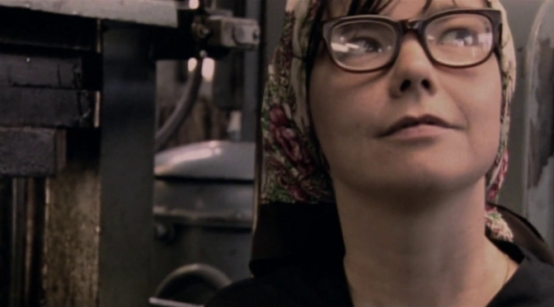
Lars von Trier’s “Dancer in the Dark” is a devastating exploration of maternal sacrifice set against the bleak backdrop of industrial America. The film follows Selma Ježková, a Czech immigrant and single mother who suffers from a hereditary degenerative eye condition. Knowing her son Gene will inevitably face the same fate without an expensive operation, Selma works tirelessly in a factory, hoarding every penny. The film is a masterclass in contrasting the grim, unforgiving nature of reality with the boundless, colorful sanctuary of the human imagination.
Selma’s Tragic Reality vs. Musical Escapism
Selma’s daily life is a grueling marathon of physical labor, poverty, and the terrifying, encroaching darkness of her failing vision. To survive this unbearable reality, she retreats into a subjective world governed by the rules of classic Hollywood musicals. The rhythmic, mechanical sounds of the factory presses, the clatter of a passing train, or the scratching of a pencil become the percussive foundations for elaborate, joyous musical numbers. This escapism is not merely a stylistic choice by the director; it is a vital psychological coping mechanism for Selma. In her daydreams, the harshness of her environment is neutralized, and the people who exploit or misunderstand her become harmonious participants in her orchestrated joy.
The Weight of Maternal Love and Ultimate Sacrifice
The emotional core of “Dancer in the Dark” is Selma’s unwavering, almost terrifying dedication to her son. Her love is not portrayed through grandiose speeches, but through the agonizing physical toll she endures and the moral compromises she is forced to make. When her savings are stolen by a desperate neighbor, Selma’s subsequent actions—driven entirely by the need to secure her son’s surgery—lead her down a path of inescapable tragedy. The film asks profound questions about the nature of sacrifice: Is Selma’s ultimate fate a victory because she achieves her goal, or is it a crushing defeat at the hands of a merciless justice system? Her martyrdom is pure, yet profoundly disturbing, leaving the audience to grapple with the immense weight of a mother’s love.
To fully understand the depth of Selma’s character, one must analyze the specific elements that define her journey:
- The Symbolism of Sight: Sight in the film represents both physical capability and the harsh truth of the world. Selma’s blindness is both a vulnerability and a shield against the cruelty around her.
- The Betrayal of Trust: Selma’s tragic downfall is catalyzed by her misplaced trust in authority figures and neighbors, highlighting the vulnerability of immigrants and the disabled.
- The Final Song: Even in the face of ultimate despair, Selma’s reliance on music remains her only solace, culminating in a heartbreaking final performance that defies the silence of death.
A Beautiful Mind: The Fragile Genius of John Nash
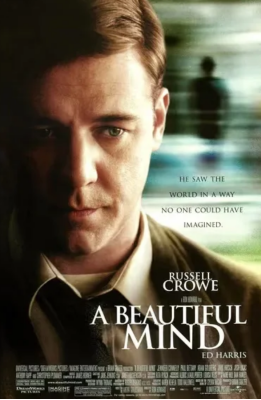
Directed by Ron Howard, “A Beautiful Mind” offers a biographical, yet heavily dramatized, look into the life of John Forbes Nash Jr., a brilliant mathematician whose groundbreaking work in game theory was interrupted by the onset of paranoid schizophrenia. The film chronicles his journey from an eccentric, socially awkward graduate student at Princeton to a man consumed by intricate delusions, and finally, to an elder statesman of mathematics who learns to coexist with his fractured mind. It is a profound study of how genius and madness can fiercely intertwine.
The Descent into Paranoid Schizophrenia
The film brilliantly subverts audience expectations by initially presenting Nash’s delusions as objective reality. We are introduced to his charismatic roommate Charles, Charles’s young niece Marcee, and the imposing Department of Defense agent William Parcher. It is only halfway through the narrative that the devastating truth is revealed: these individuals exist entirely within Nash’s mind. This narrative trick forces the audience to experience the terrifying disorientation of schizophrenia firsthand. Nash’s descent is marked by obsessive pattern recognition, where he connects unrelated newspaper clippings to uncover fabricated Soviet plots. His brilliant mind, heavily reliant on logic and absolute truth, becomes the very instrument of his psychological imprisonment.
The Role of Unconditional Love and Rehabilitation
While Nash’s intellect is the focal point of his academic success, it is the enduring love and resilience of his wife, Alicia, that serves as his anchor to reality. The film does not shy away from the immense toll mental illness takes on caregivers. Alicia’s journey from a smitten student to an exhausted, terrified, yet fiercely loyal wife is portrayed with raw honesty. When traditional psychiatric treatments—such as brutal insulin shock therapy and mind-numbing medication—fail to restore the man she loves, it is their mutual decision to tackle the illness through conscious, rational defiance that marks the turning point. Nash eventually learns to “starve” his delusions of attention, acknowledging their presence but refusing to engage with them, demonstrating a monumental triumph of will.
Contrasting Escapes: Music vs. Mathematics
Though “Dancer in the Dark” and “A Beautiful Mind” belong to entirely different genres and tackle different specific afflictions, they are fundamentally connected by their protagonists’ reliance on complex internal worlds to navigate unbearable external realities. By contrasting Selma’s musical daydreams with Nash’s mathematical delusions, we can uncover profound insights into how the human brain constructs alternate realities as a form of self-preservation and meaning-making.
Subjective Realities as Survival Mechanisms
For Selma, the creation of a subjective reality is a conscious, voluntary escape. She actively seeks out the rhythms in her environment to trigger her musical fantasies, using them as a temporary anesthetic against the pain of her impending blindness and poverty. Her internal world is a place of harmony, justice, and joy. Conversely, John Nash’s subjective reality is an involuntary, terrifying manifestation of his illness. His delusions initially provide him with a sense of immense importance and purpose—cracking codes for the government—but quickly devolve into a state of relentless paranoia and fear. While Selma’s mind creates a sanctuary, Nash’s mind constructs a labyrinthine prison.
The Visual Language of Delusion and Daydream
The visual execution of these internal states further highlights their differences. Let us examine the contrasting methodologies used by both films to portray these complex psychological phenomena:
| Feature | Dancer in the Dark (Selma) | A Beautiful Mind (John Nash) |
|---|---|---|
| Nature of Reality | Voluntary, joyful escapism (Daydreams) | Involuntary, paranoid delusions (Schizophrenia) |
| Visual Style | Saturated colors, dynamic multi-camera setups | Seamless integration with objective reality |
| Auditory Triggers | Mechanical noises transforming into beats | Internal voices and perceived external threats |
| Purpose of Illusion | To endure physical pain and emotional despair | A misfiring of genius-level pattern recognition |
| Resolution | Tragic end, but the music remains pure to her | Learning to rationally ignore the hallucinations |
This table illustrates the dichotomy between the two cinematic approaches. While Selma’s musical interludes are distinctly separated from her bleak reality through stylistic shifts (such as Lars von Trier’s use of 100 digital cameras to capture the dance sequences), Nash’s hallucinations are filmed with the exact same cinematic grammar as the real world, emphasizing the terrifying indistinguishability of his delusions.

The Lasting Impact of Psychological Cinema
Films that delve deep into the abyss of mental illness and physical despair leave an indelible mark on the cultural consciousness. They do more than simply entertain; they educate, challenge, and provoke profound introspection. The lasting impact of such cinema lies in its ability to humanize statistics and medical diagnoses, transforming abstract concepts into deeply personal, relatable human experiences.
Destigmatizing Mental Illness and Disability
For decades, mental illness and severe physical disabilities were either ignored by mainstream cinema or utilized purely as tropes for horror and suspense. Films like “A Beautiful Mind” played a pivotal role in shifting this paradigm. By portraying John Nash not as a monster, but as a brilliant, flawed, and suffering human being, the film helped to significantly destigmatize schizophrenia. It showcased that individuals battling severe mental health conditions could still lead meaningful lives, maintain deep relationships, and contribute monumentally to society. Similarly, “Dancer in the Dark” forces audiences to confront the systemic cruelties faced by the disabled and the impoverished, demanding a reevaluation of how society treats its most vulnerable members.
Empathy Through the Lens of Tragedy
The emotional devastation experienced at the conclusion of these films is not gratuitous; it is a calculated mechanism to forge lasting empathy. When we watch Selma walk to her execution, singing her final, breathless notes, or when we see an aged Nash quietly acknowledging his persistent demons before accepting his Nobel Prize, we are fundamentally changed. These cinematic moments bypass intellectual understanding and strike directly at the emotional core, leaving viewers with a heightened sensitivity to the unseen struggles of those around them.
- Educational Value: These narratives provide a baseline understanding of complex conditions, encouraging viewers to seek out factual information.
- Cultural Conversations: Award-winning films generate media discourse, bringing topics of mental health funding and disability rights to the forefront of public debate.
- Artistic Innovation: The challenge of portraying internal states pushes directors, cinematographers, and sound designers to invent new techniques, advancing the art form of cinema itself.

The Cinematic Techniques of Portraying the Unseen
Translating the intangible elements of the human mind into a visual and auditory medium requires immense technical ingenuity. The directors of both “Dancer in the Dark” and “A Beautiful Mind” employed highly specific, often groundbreaking cinematic techniques to ensure the audience was not merely watching a story, but viscerally experiencing a psychological state.
Sound Design as a Narrative Device
In “Dancer in the Dark,” sound design is arguably the most crucial element of the film’s structure. Lars von Trier uses diegetic sound—the natural sounds originating within the film’s environment—as the literal foundation for the musical numbers. The heavy, rhythmic thud of a factory press or the screech of train wheels is meticulously isolated and amplified, gradually morphing into the percussion track of a Björk composition. This technique brilliantly illustrates how Selma’s brain processes trauma and exhaustion, actively converting auditory pain into musical pleasure. It is a profound auditory representation of psychological resilience.
Visual Trickery and the Unreliable Camera
In contrast, Ron Howard utilized visual subtlety in “A Beautiful Mind” to portray Nash’s schizophrenia. The camera acts as a deceptive narrator. Howard deliberately avoided traditional visual cues that typically signal a dream sequence or hallucination, such as blurred edges, altered color grading, or distorted audio. When the character of Charles enters the room, he casts a shadow, interacts with objects, and is framed with the exact same lighting and lens choices as real characters. This strict adherence to visual realism is what makes the mid-film revelation so profoundly shocking to the audience. We realize that the camera has been lying to us, perfectly replicating the betrayal Nash experiences from his own mind.

Frequently Asked Questions (FAQ)
To further enrich your understanding of these cinematic masterpieces and the profound themes they explore, we have compiled detailed answers to some of the most pressing questions surrounding the intersection of film, mental illness, and psychological despair.
- How accurate is “A Beautiful Mind” in its portrayal of John Nash’s schizophrenia?
- While “A Beautiful Mind” brilliantly captures the emotional and psychological terror of schizophrenia, it takes significant creative liberties for narrative purposes. In reality, John Nash experienced primarily auditory hallucinations, not the complex visual hallucinations (seeing actual people) depicted in the film. The filmmakers chose to use visual hallucinations because they translate more effectively to the visual medium of cinema, allowing the audience to immediately grasp the reality-altering nature of his delusions. Additionally, the film simplifies his recovery and omits darker aspects of his personal life to maintain a cohesive, inspirational Hollywood narrative.
- Why did Lars von Trier choose to make “Dancer in the Dark” a musical?
- Lars von Trier utilized the musical genre to create a stark, jarring contrast with the bleak, hyper-realistic, documentary-style cinematography of the film’s non-musical scenes. The musical numbers represent Selma’s internal sanctuary and her ultimate coping mechanism against immense suffering. By juxtaposing the artificial, joyous, and perfectly choreographed world of the classic Hollywood musical with the grim, unforgiving reality of poverty and capital punishment, von Trier amplifies the tragedy of Selma’s situation, making her emotional journey infinitely more devastating.
- What is the significance of the “ignoring” strategy John Nash uses at the end of “A Beautiful Mind”?
- The strategy of consciously ignoring his hallucinations represents a monumental shift in Nash’s relationship with his illness. Rather than relying solely on debilitating medications or attempting to cure an incurable condition, Nash uses his greatest asset—his logical, brilliant mind—to recognize that his delusions do not age and therefore cannot be real. By choosing to “starve” them of his attention, he reclaims agency over his life. It highlights a profound message about mental illness: management and coexistence are often the realistic goals, rather than a magical cure.
- How do these films utilize the concept of “The Unreliable Narrator”?
- Both films deeply embed the audience in the perspective of a protagonist whose perception of reality is fundamentally flawed or altered. In “A Beautiful Mind,” the entire first half of the film is an exercise in the unreliable narrator, tricking the audience into accepting delusions as facts. In “Dancer in the Dark,” while the narrative itself is straightforward, Selma’s subjective musical interludes interrupt the objective reality, forcing the viewer to experience the world through her desperate, escapist lens. This technique fosters deep empathy by making the audience complicit in the characters’ psychological states.
- Can cinema effectively change societal views on mental health and disability?
- Yes, cinema possesses a profound power to shift societal paradigms. By humanizing complex conditions like schizophrenia or degenerative blindness, films replace abstract fears and stigmas with relatable human faces and emotional journeys. “A Beautiful Mind” sparked widespread discussions about the treatment of mental illness and the capabilities of neurodivergent individuals, while “Dancer in the Dark” highlighted the intersectional vulnerabilities of disability, poverty, and the justice system. When crafted with care and depth, films serve as powerful catalysts for empathy and social change.
Editorial boundary: This article is independent commentary and general cultural analysis. It is not official, authorized, endorsed, or affiliated with any studio, publisher, streaming platform, franchise, creator, or rights holder mentioned.