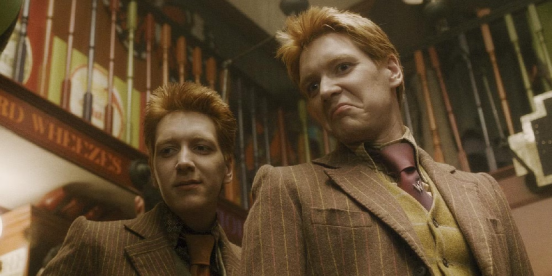
Fred and George Weasley represent more than just comic relief in the Harry Potter saga; they are the embodiment of creative rebellion and entrepreneurial spirit. Born on April Fools’ Day, their destiny as the wizarding world’s premier pranksters was written in the stars. This guide dives deep into their transition from the “middle children” of the Weasley family to the founders of a retail empire that flourished even in the darkest of times.
The Dual Legacy of the Weasley Twins: Beyond the Pranks
While many saw only chaos in their wake, Fred and George operated with a sophisticated understanding of magic and human psychology. Their ability to turn mundane school rules into opportunities for innovation set them apart from their peers. They didn’t just break rules; they redesigned the boundaries of what was possible within the walls of Hogwarts.
The Psychology of Humor as Resistance
In the wizarding world, laughter is often the only defense against the paralyzing effects of fear. Fred and George understood this instinctively. During the reign of Dolores Umbridge, their humor became a political statement. By making the authority figure a laughingstock, they stripped her of her power and gave the students a sense of agency and hope.
- The Marauder’s Map: Their discovery and mastery of this artifact proved their intellectual capability and their dedication to “mischief managed.”
- The Swamp: Their creation of a portable swamp in a Hogwarts corridor was a masterclass in permanent sticking charms and symbolic defiance.
- The Great Departure: Their final exit from Hogwarts on broomsticks remains one of the most iconic moments of rebellion in literary history.

Strategic Rebellion: Humor as a Tool for Resistance
The twins’ transition from schoolboy pranks to wartime resistance was seamless. As members of the Order of the Phoenix, they used their skills for more than just laughs. They provided morale-boosting products and risked their lives in the Battle of the Seven Potters, where George famously lost an ear—a tragedy he immediately met with a joke about being “holey.”
Expert Advice: The Value of Levity in Crisis
According to wizarding historians, the twins’ presence during the Second Wizarding War was essential for civilian morale. Their radio broadcasts on “Potterwatch” provided vital information mixed with the levity needed to prevent the public from falling into total despair. Their philosophy was simple: if you stop laughing, the Dark Arts have already won.
| Phase of Rebellion | Key Action | Impact on the Wizarding World |
|---|---|---|
| Hogwarts Era | Defying Umbridge | Inspired student-led resistance movements. |
| War Era | Potterwatch Radio | Provided truth and hope to those in hiding. |
| Battle Era | Battle of Hogwarts | Direct combat against Death Eaters to protect the school. |

The Entrepreneurial Spirit: Building Weasleys’ Wizard Wheezes
Weasleys’ Wizard Wheezes (WWW) was not an overnight success; it was the result of years of R&D (Research and Development) conducted in the Gryffindor common room. While their mother, Molly, saw their inventions as a distraction, the twins were actually building a sophisticated business model based on high-demand, high-innovation products.
Operational Details: The Product Pipeline
The twins utilized “Skiving Snackboxes” to identify market needs—students wanting to avoid class. They then expanded into defensive magic, selling Shield Hats and Decoy Detonators to the Ministry of Magic itself. This pivot from “jokes” to “defense” showed a level of business acumen rarely seen in the wizarding world.
Checklist for a Successful Joke Shop:
- Innovation: Develop products that solve a problem (e.g., Peruvian Instant Darkness Powder).
- Testing: Use willing (or sometimes unwilling) subjects to ensure safety and efficacy.
- Branding: Vibrant colors and bold slogans to stand out in a drab environment.
- Location: Securing a prime spot in Diagon Alley (Number 93) was crucial for foot traffic.

Character Analysis: The Subtle Nuances Between Fred and George
Though often viewed as a single unit, Fred and George had distinct personalities. Fred was generally the more assertive and outspoken of the two, often taking the lead in their schemes. George was slightly more sensitive and served as the grounding force, though no less brilliant in his magical abilities.
The Tragedy of the Final Battle
The death of Fred Weasley during the Battle of Hogwarts remains one of the most heartbreaking moments of the series. It shattered the “twin” dynamic that had defined their lives. George continued the business, eventually joined by his younger brother Ron, but the loss of Fred meant that a piece of the world’s joy had been permanently extinguished.
Pro Tip: When analyzing the twins, look at their dialogue. Fred often starts the sentences, while George finishes them, symbolizing their symbiotic relationship. Their separation is the ultimate subversion of their “undividable” nature.
Frequently Asked Questions (FAQ)
- How did Fred and George get the money to start their shop?
- They received their initial capital from Harry Potter, who gave them his Triwizard Tournament winnings (1,000 Galleons) because he believed the world needed more laughter.
- What happened to George Weasley after Fred died?
- George continued to run Weasleys’ Wizard Wheezes. He eventually married Angelina Johnson and named his first son Fred in honor of his brother.
- Were Fred and George actually good at magic?
- Yes, they were exceptionally gifted. Hermione Granger herself noted that the magic they used for their products was highly advanced, often involving complex charms and potions that many adult wizards couldn’t master.
- Did Fred and George ever complete their schooling?
- No, they famously dropped out during their seventh year as a final act of rebellion against Dolores Umbridge, choosing to pursue their business full-time instead of taking their N.E.W.T.s.
- Which twin was older?
- Fred was the older of the two twins, which often reflected in his slightly more dominant role in their social interactions and business planning.
Editorial boundary: This article is independent commentary and general cultural analysis. It is not official, authorized, endorsed, or affiliated with any studio, publisher, streaming platform, franchise, creator, or rights holder mentioned.