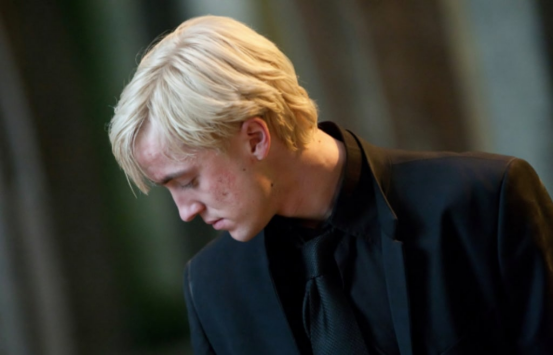
The Harry Potter series is celebrated not only for its magical world-building but for its profound exploration of human nature, morality, and the power of choice. Central to this exploration are the characters who inhabit the “gray areas” of the narrative—those who are neither purely heroic nor entirely villainous. Draco Malfoy, Severus Snape, and Sirius Black represent three distinct yet overlapping paths of rebellion, sacrifice, and redemption. While their backgrounds vary from the heights of pure-blood aristocracy to the depths of the Death Eater ranks, each character undergoes a transformative journey that challenges the reader’s perception of “good” and “evil.”
The Moral Evolution of Draco Malfoy: From Arrogance to Hesitation
Draco Malfoy begins his journey as the quintessential antagonist—a spoiled, arrogant bully whose worldview is strictly defined by the pure-blood supremacy doctrines of his father, Lucius Malfoy. Throughout his early years at Hogwarts, Draco serves as a foil to Harry Potter, representing the entitled elite who believe that heritage dictates worth. However, his character arc takes a dramatic and darker turn during the events of “The Half-Blood Prince,” where the reality of serving Lord Voldemort shatters his youthful illusions of glory.
The Weight of the Malfoy Legacy
For Draco, the pressure to uphold the Malfoy name was both a privilege and a prison. Raised in an environment where failure was not an option and loyalty to the Dark Arts was expected, Draco’s initial enthusiasm for becoming a Death Eater was rooted in a desire for validation. However, when tasked with the assassination of Albus Dumbledore, Draco confronted the visceral reality of murder. The psychological toll was evident; his physical decline and emotional isolation during his sixth year highlighted the disconnect between his projected bravado and his internal moral compass.
The Turning Point: The Astronomy Tower
The pivotal moment of Draco’s moral awakening occurred atop the Astronomy Tower. Despite having cornered a weakened Dumbledore, Draco found himself unable to strike the killing blow. This hesitation was not a sign of weakness, but rather the first significant manifestation of his humanity. Dumbledore’s recognition of this—stating, “Draco, you are not a killer”—served as a catalyst for his eventual distancing from the Death Eater cause. While Draco did not immediately join the side of light, his refusal to identify Harry at Malfoy Manor further cemented his quiet rebellion against the Dark Lord’s tyranny.

Severus Snape: The Enigma of Love, Guilt, and Ultimate Sacrifice
Severus Snape remains perhaps the most debated figure in modern literature. His journey is a complex tapestry of unrequited love, bitter resentment, and an unwavering commitment to a cause that required him to live a life of total deception. Snape’s transition from a bullied outcast to a Death Eater, and finally to a double agent for the Order of the Phoenix, illustrates the transformative power of remorse and the enduring nature of love.
From Darkness to the Path of Remorse
Snape’s early life was marked by poverty and social isolation, with Lily Evans being his only source of light. His descent into the Dark Arts was fueled by a need for belonging and power, leading him to join Voldemort’s ranks. However, the moment he realized that his actions—specifically reporting the prophecy—put Lily’s life in jeopardy, his allegiance shifted irrevocably. His plea to Dumbledore to “hide them all” marked the beginning of his decades-long penance.
The Burden of the Double Agent
To serve as a double agent, Snape had to maintain a cold, often cruel exterior, alienating the very people he was working to protect. His role required the ultimate sacrifice: the murder of Albus Dumbledore. This act, committed at Dumbledore’s own request to save Draco’s soul and protect Snape’s cover, branded him a traitor in the eyes of the Wizarding World. The sheer mental fortitude required to lie to the world’s most accomplished Legilimens, Lord Voldemort, while protecting Harry Potter—the living reminder of his greatest rival and his lost love—is unparalleled in the series.

Sirius Black: The Rebel of the Noble House of Black
Sirius Black represents a different kind of moral journey—one of inherent rebellion against a corrupt system from a young age. Unlike Draco, who struggled to break free from his family’s influence, Sirius rejected the “Noble and Most Ancient House of Black” while still a student. His life is defined by his fierce loyalty to his chosen family—the Marauders—and the tragic consequences of a betrayal he did not commit.
The Price of Defiance
Sirius’s decision to run away from home at sixteen and his sorting into Gryffindor were acts of profound defiance against his family’s pro-Slytherin, pure-blood supremacist values. This rebellion, however, came at a high cost. After being framed by Peter Pettigrew for the betrayal of the Potters and the murder of twelve Muggles, Sirius spent twelve years in Azkaban. The psychological endurance he displayed, fueled by the knowledge of his innocence and his obsession with protecting Harry, speaks to his indomitable spirit.
A Legacy of Sacrifice
Upon his escape, Sirius’s life remained one of confinement and sacrifice. Forced to hide in the very house he loathed—12 Grimmauld Place—he continued to support the Order of the Phoenix. His relationship with Harry provided him with a sense of purpose, serving as both a godfather and a link to Harry’s past. His death in the Department of Mysteries was the final act of a man who spent his entire life fighting against the darkness, both within his own family and in the wider world.

The Intersecting Themes of Choice and Redemption
When analyzing Draco, Snape, and Sirius together, a clear theme emerges: our choices define us far more than our abilities or our origins. These three characters provide a comprehensive look at how individuals navigate a world torn between conflicting ideologies.
A Comparison of Moral Paths
| Character | Primary Motivation | Form of Rebellion | Ultimate Sacrifice |
|---|---|---|---|
| Draco Malfoy | Family Survival | Hesitation to kill; refusal to identify Harry. | Loss of status and family safety. |
| Severus Snape | Love for Lily Evans | Acting as a double agent; protecting Harry. | His life and reputation. |
| Sirius Black | Loyalty to Friends | Rejecting the Black family legacy. | His freedom and eventually his life. |
While Sirius was born into darkness and chose light early on, Draco was born into darkness and had to find his way to the gray through suffering. Snape, conversely, chose darkness and spent the rest of his life working his way back to the light. Each path highlights that redemption is not a single act, but a continuous series of difficult decisions.
The Role of Mentorship and Influence
The influence of Albus Dumbledore is a common thread among these three. Dumbledore saw the potential for good in Draco, the capacity for remorse in Snape, and the unwavering loyalty in Sirius. By providing these characters with opportunities to act on their better instincts, Dumbledore facilitated their roles in the eventual defeat of Voldemort. This underscores the importance of empathy and the belief that no one is beyond saving if they are willing to make the right choice.
Frequently Asked Questions (FAQ)
- Q1: Why is Severus Snape considered a hero despite his bullying of students?
- Snape is considered a “tragic hero” because his ultimate goals were noble, even if his methods and personality were flawed. His protection of Harry and his role in Voldemort’s downfall were essential to the survival of the Wizarding World. His heroism lies in his sacrifice and his ability to overcome his own bitterness for a greater cause.
- Q2: Did Draco Malfoy ever truly become a Death Eater in his heart?
- No. While he took the Dark Mark, Draco’s actions in “The Half-Blood Prince” and “The Deathly Hallows” suggest he was a “reluctant” Death Eater. He was driven by fear for his family’s safety rather than a genuine belief in Voldemort’s cause or a desire to commit murder.
- Q3: What makes Sirius Black different from the rest of the Black family?
- Sirius possessed an innate sense of justice and empathy that clashed with the Black family’s obsession with blood purity. His friendship with James Potter, Remus Lupin, and Peter Pettigrew provided him with a different moral framework, leading him to value character over heritage.
- Q4: How does Snape’s Patronus relate to his redemption?
- Snape’s Patronus, a silver doe, is identical to Lily Evans’s. This symbolizes that his entire moral journey and his work for the Order were driven by his enduring love for her. It serves as the ultimate proof of his loyalty to her memory and his departure from the path of the Death Eaters.
- Q5: What happened to Draco Malfoy after the war?
- After the war, Draco moved away from the radical pure-blood ideologies of his parents. He married Astoria Greengrass, who shared his more tolerant views, and they raised their son, Scorpius, to be a more compassionate person, effectively breaking the cycle of hate that had plagued the Malfoy family for generations.
Editorial boundary: This article is independent commentary and general cultural analysis. It is not official, authorized, endorsed, or affiliated with any studio, publisher, streaming platform, franchise, creator, or rights holder mentioned.