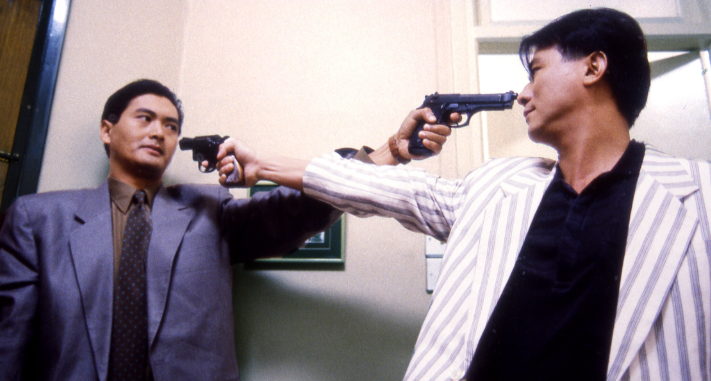
The action film genre is a canvas of kinetic energy, a symphony of controlled chaos that has evolved dramatically over the decades. More than just explosions and fistfights, the true artistry lies in the action aesthetics—the distinct visual and thematic language used to portray conflict and heroism. From the balletic gunfights of Hong Kong cinema to the gritty realism of modern practical stunts, these stylistic choices define not only individual films but entire eras of filmmaking. This guide delves into the landmark movies that have shaped, redefined, and revolutionized action aesthetics, creating a legacy that continues to influence cinema today.
We will journey from the groundbreaking work of John Woo and Jackie Chan, which introduced a new level of choreography and physical prowess, to the high-octane, maximalist blockbusters of Hollywood. We’ll analyze how films like Die Hard created the template for the “everyman” hero trapped in a confined space, and how Mad Max: Fury Road pushed practical filmmaking to its absolute limit. By examining the DNA of these iconic films, we uncover how the art of action is a powerful tool for storytelling, character development, and pure, unadulterated spectacle.
The Dawn of Stylized Violence: Hong Kong’s Cinematic Revolution
Long before Hollywood dominated the global action scene, Hong Kong was a powerhouse of innovation, creating a visual language that would be emulated for decades. This era was defined by two distinct but equally influential pillars: the “heroic bloodshed” genre and the death-defying stunt work of a new generation of martial arts stars. These films prioritized physicality, intricate choreography, and a unique blend of violence and artistry.
John Woo’s Heroic Bloodshed in A Better Tomorrow
Director John Woo redefined the shoot-out with his 1986 masterpiece, A Better Tomorrow. He introduced the world to “heroic bloodshed,” a subgenre characterized by its highly stylized, almost operatic, gunfights. Woo transformed violence into a form of visual poetry, emphasizing themes of brotherhood, honor, and redemption amidst a hail of bullets. The film’s influence cannot be overstated, establishing a new aesthetic for on-screen gunplay.
The key elements that defined this aesthetic include:
- Dual-Wielding Pistols: Chow Yun-fat’s character, Mark Gor, striding through a restaurant with a pistol in each hand, became an iconic image that symbolized grace and lethality.
- Slow-Motion Action: Woo used slow motion not just for emphasis, but to capture the “ballet of death.” It allowed audiences to appreciate the intricate choreography of a gunfight, turning brutal violence into a mesmerizing spectacle.
- The “Gun-Fu” Precursor: While the term would be popularized later, the seeds of Gun-Fu are present here. Characters move with a dancer’s grace, seamlessly integrating gunplay with acrobatic movements, creating a fluid and continuous action sequence.
Jackie Chan’s Practical Stunts in Police Story
While John Woo was perfecting the art of the gunfight, Jackie Chan was revolutionizing physical action in Police Story (1985). Chan blended his incredible martial arts skills with large-scale, dangerous stunts, creating a unique brand of action-comedy that was both thrilling and accessible. He rejected the use of obvious stunt doubles, putting his own body on the line to capture a sense of authenticity and danger that was palpable to the audience. This commitment to practical stunt work became his trademark and a global phenomenon.
The impact of Police Story stemmed from its raw physicality and creative set-pieces. The final sequence in a shopping mall, where Chan slides down a pole covered in exploding lights before crashing through a glass display, is legendary. It showcased a form of action grounded in real-world physics, however exaggerated, and set a new standard for what a leading man was willing to endure for a shot. This approach directly influenced Hollywood, inspiring a greater appreciation for practical effects and intricate stunt coordination.

The Hollywood Blockbuster: Explosions and Everyman Heroes
As Hong Kong’s influence spread, Hollywood was cultivating its own distinct action aesthetics during the 1980s and 1990s. This era saw the rise of two dominant, and in many ways opposing, archetypes: the larger-than-life spectacle driven by military hardware and explosions, and the grounded, vulnerable hero facing overwhelming odds. These two approaches would come to define the American action movie for a generation.
Michael Bay’s Maximalism: The Rock
No director is more synonymous with explosive spectacle than Michael Bay. His 1996 film, The Rock, is a masterclass in his signature style of “Bayhem.” This aesthetic is characterized by a “more is more” philosophy, filling the screen with rapid cuts, sweeping camera movements, lens flares, and, of course, massive, fiery explosions. The Rock refined this formula, combining the charisma of stars like Sean Connery and Nicolas Cage with a high-stakes plot involving chemical weapons on Alcatraz Island.
Bay’s aesthetic is designed for sensory overload. The action is relentless, often featuring military-grade hardware and a patriotic, heroic gloss. This approach emphasizes scale and impact over intricate choreography, making the environment and the machinery of war central characters in the action. It created a blueprint for the high-budget summer blockbuster that prioritized visceral thrills and visual grandeur.
The Relatable Hero: Die Hard’s Enduring Formula
In stark contrast to the muscle-bound heroes of the early 80s, 1988’s Die Hard introduced a new kind of protagonist: John McClane, an ordinary New York cop trapped in a skyscraper with a group of terrorists. This film perfected the “everyman hero” archetype—a vulnerable, resourceful, and wisecracking character who survives on wit and grit rather than superpowers. The film’s setting, the claustrophobic Nakatomi Plaza, essentially created a vertical “escape room,” forcing McClane to use his environment in clever and desperate ways.
The aesthetic of Die Hard is grounded and tactical. The action feels consequential because the hero is breakable. He gets cut, he gets tired, and he is constantly outgunned. This sense of vulnerability makes his triumphs more impactful. The film’s structure—a single, contained location against a superior force—became a subgenre in itself, inspiring countless “Die Hard on a…” scenarios for years to come.

Pushing the Limits: Practical Stunts and Post-Apocalyptic Spectacle
As audiences grew accustomed to CGI-heavy blockbusters, a counter-movement emerged, championing a return to tangible, in-camera action. This modern era of action filmmaking is defined by an incredible commitment to practical effects and physical performance, proving that real-world stunts can deliver a level of grit and intensity that digital effects often struggle to replicate. This push for authenticity has resulted in some of the most visually stunning and immersive action sequences ever filmed.
Mad Max: Fury Road and Wasteland Aesthetics
George Miller’s Mad Max: Fury Road (2015) was a revolutionary moment for action cinema. The film is essentially a two-hour-long chase sequence, a relentless onslaught of vehicular warfare set in a vibrant, post-apocalyptic desert. Miller’s vision for “wasteland aesthetics” is a bizarre and beautiful mix of punk-rock creativity and mechanical mayhem. Every vehicle is a unique character, and every stunt feels terrifyingly real because, for the most part, it was.
The production famously relied on an army of stunt performers, engineers, and drivers to execute its complex sequences in-camera. The use of “polecats” swinging between speeding war rigs and the explosive destruction of custom-built vehicles created a visceral, tactile experience. Fury Road proved that a blockbuster could be both an avant-garde art film and a breathtaking action spectacle, setting a new benchmark for practical filmmaking in the 21st century.
Mission: Impossible – Fallout and the Tom Cruise Factor
The Mission: Impossible franchise, particularly with Fallout (2018), has become the gold standard for star-driven practical stunt work. At the center of this is Tom Cruise, an actor whose dedication to performing his own stunts has become a primary marketing tool and a core element of the series’ aesthetic. His “go-getter spirit” means that when you see Ethan Hunt hanging from a helicopter or performing a HALO jump, you are seeing the actor himself doing it.
This commitment fundamentally changes the audience’s relationship with the action. The stakes feel higher because the danger is real. Director Christopher McQuarrie builds sequences around these incredible feats, using long, clear takes to showcase the stunts without relying on frantic editing to hide a double. The HALO jump, the helicopter chase, and the rooftop run (where Cruise famously broke his ankle) are masterclasses in building tension through authentic, high-risk performance, reshaping the modern spy-thriller.

The Modern Synthesis: Gun-Fu and Franchise Power
Contemporary action cinema often blends the best elements of what came before, synthesizing stylized choreography, practical grit, and emotional storytelling into powerful new forms. This era is marked by the refinement of established techniques and the elevation of action into a central narrative driver, all while building expansive worlds that can sustain blockbuster franchises.
John Wick and the Rebirth of Gun-Fu
The John Wick series, starting in 2014, single-handedly revitalized the action genre with its hyper-stylized, meticulously choreographed aesthetic known as “Gun-Fu.” A direct evolution of the concepts pioneered by John Woo, Gun-Fu combines close-quarters combat, grappling, and precision shooting into a seamless and brutal dance. Keanu Reeves underwent extensive training to perform these sequences, lending an authenticity that makes every movement believable, despite the heightened reality.
The aesthetic of John Wick is defined by several key principles:
- Efficiency and Precision: Every action is deliberate, from tactical reloads to center-axis relock shooting stances. The violence is not chaotic but methodical.
- Long Takes: Directors Chad Stahelski and David Leitch, both former stuntmen, use wide shots and long takes to allow the audience to fully appreciate the choreography and Reeves’s performance.
- World-Building: The action is integrated into a rich, underground world of assassins with its own rules, currency, and codes of conduct. The action serves the story and expands the lore.
This approach, often called a “gun ballet,” brought a new level of artistry and respect to the genre, influencing countless films and video games that followed.
Fast & Furious 7: Spectacle as Emotional Storytelling
The Fast & Furious franchise evolved from a story about street racing into a global action saga defined by physics-defying spectacle and the central theme of “family.” Furious 7 (2015) represents the pinnacle of this evolution, where the action set-pieces—like cars parachuting from a plane or crashing through skyscrapers in Abu Dhabi—are pushed to absurd, yet wildly entertaining, extremes. The aesthetic is pure Hollywood maximalism, designed to generate awe and applause.
However, what makes Furious 7 unique is how it uses this spectacle to service an emotional core. The film also serves as a poignant farewell to star Paul Walker, who passed away during production. The final sequence, where Dominic Toretto (Vin Diesel) and Brian O’Conner (Walker) drive their separate ways, is a powerful moment of meta-narrative. It demonstrates that even in a franchise built on impossible action, the aesthetic can be harnessed to deliver a genuinely moving and heartfelt conclusion, cementing the bond between the characters and the audience.

The Enduring Legacy of Action Aesthetics
The evolution of action aesthetics is a story of constant innovation, a global dialogue between filmmakers pushing the boundaries of what is possible on screen. The stylized violence of Hong Kong taught Hollywood new ways to choreograph action. The everyman hero of Die Hard provided a relatable counterpoint to invincible supermen. The practical-first approach of filmmakers like George Miller and the Mission: Impossible crew reminded us of the visceral thrill of real-world danger, while the refined Gun-Fu of John Wick brought a new level of artistry to the shoot-out. Each of these films and their unique aesthetics have left an indelible mark on cinema, creating a rich and diverse tapestry of action that continues to inspire and entertain audiences worldwide. The legacy is not just in the individual techniques, but in the understanding that how an action sequence is filmed is just as important as the action itself.
Frequently Asked Questions (FAQ)
- What is “heroic bloodshed” in action movies?
- Heroic bloodshed is a genre of Hong Kong action cinema popularized by director John Woo in films like A Better Tomorrow. It is characterized by highly stylized and balletic gunfights, often featuring dual-wielding protagonists, slow-motion, and strong thematic elements of brotherhood, honor, and redemption among criminals or lawmen.
- How did ‘Die Hard’ change the action hero archetype?
- Die Hard shifted the paradigm from the seemingly invincible, muscle-bound heroes of the 1980s (like those played by Schwarzenegger or Stallone) to the “everyman hero.” John McClane was a vulnerable, relatable, and resourceful character who was physically and emotionally taxed by his ordeal. This made him more believable and his victories more earned, creating a template for countless action films that followed.
- What makes the action in ‘Mad Max: Fury Road’ so unique?
- The action in Mad Max: Fury Road is unique due to its overwhelming reliance on practical effects and real-world stunts. Director George Miller orchestrated complex and dangerous vehicle chases, crashes, and fights in-camera with minimal CGI enhancement. This commitment to tangible action, combined with its distinctive “wasteland aesthetic,” created a visceral and relentlessly kinetic experience that felt more grounded and intense than many of its digitally-created counterparts.
- What is the difference between John Woo’s style and ‘John Wick’s’ Gun-Fu?
- While John Woo’s films are a clear precursor, modern Gun-Fu as seen in John Wick is a more refined and systematic evolution. Woo’s style is more operatic and romantic, using slow-motion to create a “ballet of bullets.” John Wick’s Gun-Fu is more tactical and grounded, blending martial arts like judo and jiu-jitsu with close-quarters firearm techniques and efficient, realistic gun handling (like tactical reloads). It is less about the poetic look and more about the brutal efficiency of the character.
- Why is Tom Cruise’s commitment to stunts important for the ‘Mission: Impossible’ series?
- Tom Cruise performing his own dangerous stunts is central to the aesthetic and appeal of the modern Mission: Impossible films. It provides a level of authenticity and high stakes that CGI cannot replicate. Because the audience knows the danger is real for the actor, the tension is heightened. The filmmakers can also use longer, clearer shots to showcase the action, immersing the viewer in the sequence rather than relying on quick cuts to hide a stunt double.
Editorial boundary: This article is independent commentary and general cultural analysis. It is not official, authorized, endorsed, or affiliated with any studio, publisher, streaming platform, franchise, creator, or rights holder mentioned.