The Evolution of Slice-of-Life Comedy in Anime and Manga
The genre of slice-of-life comedy within anime and manga has undergone a fascinating evolution over the decades. Originally serving as brief comedic relief within larger, action-oriented narratives, the depiction of mundane, everyday situations eventually blossomed into a standalone powerhouse genre. This transformation was driven by the audience’s deep-seated desire for relatability. By holding a mirror up to the ordinary struggles of life—whether it be failing a math test, dealing with a micromanaging boss, or scheming to make a quick buck—creators discovered that the most profound humor often stems from our shared human experiences. The narrative structure of these stories relies heavily on situational irony, exaggerated character reactions, and the escalation of trivial problems into monumental crises.
Furthermore, the segmentation of these comedies into distinct life stages allows the genre to grow alongside its audience. A viewer might begin their journey laughing at the romantic misunderstandings of high school students, only to find themselves, years later, deeply resonating with the stress-induced coping mechanisms of corporate office workers. This longitudinal appeal ensures that slice-of-life comedy remains a staple of the industry, capable of generating both immense nostalgia and poignant contemporary commentary. The meticulous world-building in these series, though grounded in reality, provides a safe, humorous sandbox where societal norms are playfully subverted.
The Core Mechanisms of Mundane Humor
To truly understand the success of this genre, one must dissect the specific comedic mechanisms employed by writers and animators. Unlike fantasy or sci-fi, where humor might arise from magical mishaps, slice-of-life relies on the hyper-exaggeration of the familiar. This requires a delicate balance; push too far, and the scenario loses its relatable grounding; play it too safe, and the scene falls flat. The mastery lies in the pacing, the visual gags, and the deeply ingrained psychological profiles of the characters.
- Dramatic Irony in Daily Life: The audience is frequently given information that the characters lack, transforming a simple conversation into a minefield of hilarious misunderstandings. This is particularly prevalent in romantic subplots where two characters are entirely oblivious to each other’s true feelings, interpreting every mundane action as a complex signal.
- The Absurdist Escalation: A hallmark of the genre is taking a microscopic issue—such as accidentally eating a coworker’s pudding—and escalating it through a series of logical but extreme steps into a full-blown existential crisis or a localized apocalypse.
- Cathartic Subversion: Characters often break societal expectations in ways the audience wishes they could. A polite office worker internally screaming death metal lyrics, or a civil servant blatantly prioritizing personal wealth over duty, provides immense psychological release for viewers bound by those same societal rules.

Campus Chaos: The Daily Fun and Misunderstandings of School Life
High school is a period characterized by heightened emotions, rigid social hierarchies, and a profound lack of life experience—a perfect storm for comedy. Narratives that explore campus confusion thrive on the sheer awkwardness of adolescence. In these stories, the classroom is not merely an educational setting, but a complex battlefield of unrequited crushes, rivalries, and the desperate quest for social validation. The humor is driven by the stark contrast between the trivial nature of the students’ problems and the life-or-death importance they assign to them. A misplaced love letter or a misunderstanding during the school festival can trigger a cascade of comedic events that span entire story arcs.
Moreover, the archetype of the “School Confusion King”—the character who perpetually misinterprets the atmosphere and actions of those around them—serves as the primary engine for plot progression. This character is often well-meaning but disastrously oblivious. Their attempts to navigate the labyrinth of teenage romance and friendship usually result in spectacular, highly publicized failures. Yet, these embarrassing moments are treated with a layer of underlying warmth. The narrative ultimately celebrates the chaotic innocence of youth, reminding the audience of a time when the biggest worry in life was who to sit next to during lunchtime.
Deconstructing the High School Comedy Tropes
The architecture of campus comedy is built upon several foundational tropes that are endlessly remixed to generate new humorous scenarios. These tropes are not signs of unoriginality, but rather essential tools that provide a familiar framework for the audience, allowing the creators to subvert expectations in the punchline.
- The Intersecting Love Polygons: Instead of a simple love triangle, these narratives often feature a convoluted web of unrequited affection. Character A loves Character B, who loves Character C, who is oblivious and thinks Character A wants to fight them. This structural confusion ensures that no interaction is ever straightforward.
- The Eccentric Delinquent: A character who appears tough, dangerous, and unapproachable, but is internally sensitive, perhaps harboring a secret passion for drawing manga or caring for stray animals. The juxtaposition of their fearsome reputation with their mundane, wholesome hobbies is a reliable source of comedy.
- The Cultural Festival Disaster: The quintessential school event that forces disparate characters to collaborate. The immense pressure to succeed inevitably leads to catastrophic prop failures, accidental confessions over the PA system, and chaotic stage plays that veer wildly off script.

Workplace Survival: Navigating Office Politics and Stress
Transitioning from the classroom to the cubicle, the tone of slice-of-life comedy shifts to reflect the grinding realities of adulthood. The office story is less about romantic misunderstandings and more about basic survival in a corporate ecosystem. Here, the comedy is darker, sharper, and deeply rooted in the shared trauma of the modern workforce. Protagonists in these narratives are often entry-level employees trapped between the unreasonable demands of toxic, out-of-touch bosses and the passive-aggressive behavior of their peers. The humor acts as a coping mechanism, stripping the corporate world of its manufactured dignity and exposing the sheer absurdity of endless meetings, meaningless jargon, and the soul-crushing routine of the 9-to-5 grind.
A prime example of this dynamic is the “Workplace Xiaolie” archetype—an unassuming, diligent worker who maintains a facade of perfect professionalism while harboring an intense, explosive inner life. This duality is the comedic goldmine of the workplace subgenre. Whether it involves retreating to a bathroom stall to silently scream, or visiting a karaoke bar to belt out death metal anthems, these secret rebellions provide profound catharsis. The narrative meticulously documents the micro-aggressions of office life—the stolen lunches, the mandated unpaid overtime, the forced socialization at drinking parties—and transforms them into a hilarious critique of contemporary labor culture.
Strategies for Corporate Comedic Relief
The success of workplace comedy lies in its precise observation of corporate archetypes and the unspoken rules of office etiquette. By amplifying these elements, the narrative creates a relatable, albeit exaggerated, reflection of the viewer’s own professional life.
- The Incompetent Superior: A boss who contributes nothing of value, takes credit for the team’s success, and shifts blame for their own failures. Their sheer lack of self-awareness is portrayed with comedic brilliance, often resulting in spectacular, self-inflicted downfalls.
- The Gossip Network: The informal, highly efficient communication system run by veteran employees. The comedy arises from how quickly information (or misinformation) spreads, turning minor office faux pas into company-wide scandals within minutes.
- The Sanctuary of the Breakroom: The only neutral territory in the corporate warzone. Interactions here are fraught with tension over the coffee machine, leading to petty turf wars and passive-aggressive sticky notes that serve as a microcosm of the larger office politics.

Societal Antics: The Legendary Embarrassments of the Local Police Station
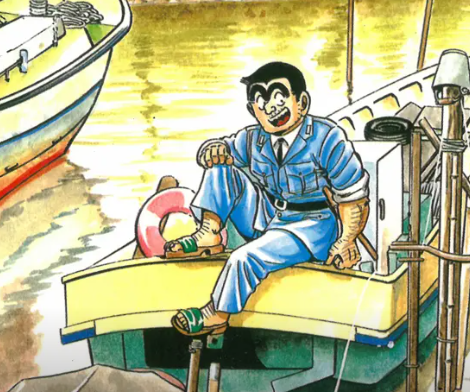
Stepping outside the confines of the school and the office, we enter the broader societal stage, often perfectly encapsulated by the setting of a local neighborhood police station (Koban). These narratives blend workplace comedy with a deep, satirical look at the general public. The plot of the “Wulong Police Station” archetype is driven by a protagonist who is fundamentally unsuited for their authoritative role. Instead of upholding the law with stoic dignity, they are deeply flawed, incredibly greedy, and constantly looking for a shortcut to wealth and fame. This setting is brilliant because a police station naturally intersects with all walks of life, providing an endless stream of bizarre citizens, petty criminals, and neighborhood disputes to fuel the comedic engine.
The “embarrassing things we have chased in those years” refers to the protagonist’s endless cycle of hubris and downfall. In every storyline, the main character devises a seemingly foolproof, highly unethical business scheme, leveraging their position or exploiting a current societal trend. They experience a brief, glorious period of immense success and wealth, only for their greed to cause a catastrophic, humiliating collapse, returning them to square one—usually with a massive mountain of debt and the wrath of their strict superiors. This formulaic approach is incredibly satisfying; it offers a moral lesson wrapped in slapstick comedy, reflecting the economic bubbles and bursts of the real world.
The Anatomy of a Perfect Comedic Scheme
The structural brilliance of these police station comedies lies in the meticulous detailing of the protagonist’s get-rich-quick schemes. The humor is not just in the failure, but in the absurd level of effort and ingenuity applied to the wrong goals.
- The Spark of Greed: The protagonist observes a mundane societal trend—such as a new toy craze, a technological advancement, or a niche hobby—and immediately calculates a highly illegal or unethical way to monopolize it.
- The Over-Engineered Execution: The plan is never simple. It involves elaborate disguises, the misuse of government property (like modifying a police cruiser into a food truck), and the coercion of gullible colleagues. The sheer scale of the operation is a testament to the character’s misplaced genius.
- The Inevitable Collapse: The downfall is always brought about by the protagonist’s inability to know when to stop. Pushing the scheme one step too far triggers a Rube Goldberg-esque chain reaction of destruction, usually resulting in a massive explosion or a public unmasking in front of their furious commanding officer.

Comparative Analysis of Comedy Archetypes Across Life Stages
To fully appreciate the depth of slice-of-life comedy, it is essential to analyze how comedic archetypes and themes adapt to different settings. While the core goal—making the audience laugh—remains the same, the vehicles for that humor shift dramatically to reflect the evolving anxieties and responsibilities of the target demographic. A high school student’s worst nightmare is social embarrassment, while an adult’s worst nightmare is financial ruin or professional disgrace. By mapping these elements, we can see the sophisticated structural design beneath the surface-level gags.
The following table provides a detailed breakdown of how narrative focus, conflict resolution, and the nature of the “comedic punishment” evolve as the setting moves from the campus to the workplace, and finally to the broader society represented by the police station. This structural consistency is what allows fans to seamlessly transition between subgenres as they age.
| Setting | Primary Source of Conflict | Protagonist’s Core Flaw | Nature of the Comedic Downfall | Underlying Theme |
|---|---|---|---|---|
| Campus / High School | Romantic misunderstandings, social hierarchy, exams. | Obliviousness, intense social anxiety, overactive imagination. | Public embarrassment, accidental confessions, physical slapstick. | The chaotic, innocent discovery of identity and relationships. |
| Corporate Workplace | Toxic management, extreme workload, office politics. | Inability to say no, repressed rage, maintaining a false facade. | Mental breakdowns in private, passive-aggressive blunders. | The struggle to maintain individuality in a soul-crushing system. |
| Society / Police Station | Financial greed, societal trends, avoiding actual work. | Hubris, insatiable greed, lack of moral compass regarding money. | Massive financial debt, physical destruction of property, demotion. | Satirical reflection on economic bubbles and human greed. |

Why We Keep Watching: The Psychological Comfort of Comedic Chaos
The enduring popularity of these narratives cannot be attributed solely to good writing or appealing animation; it is fundamentally rooted in human psychology. Slice-of-life comedy offers a unique form of psychological comfort. In a real world characterized by unpredictable crises and genuine hardships, watching fictional characters navigate their own chaotic, yet ultimately harmless, lives provides a profound sense of safety. The stakes in these shows, while feeling monumental to the characters, are objectively low. The viewer knows that no matter how disastrous the cultural festival is, or how much debt the greedy police officer accumulates, the status quo will eventually be restored. This cyclical nature is inherently soothing.
Furthermore, these shows serve as a vital tool for emotional regulation. The phenomenon of “schadenfreude”—finding pleasure in the misfortune of others—is utilized here in its most benign form. We laugh at the protagonist’s embarrassing blunders not out of malice, but out of profound empathy. We see our own awkward teenage years in the campus confusion; we see our own workplace frustrations in the office survival stories. By externalizing these internal anxieties and dressing them in absurdity, the genre allows us to process our own life experiences with laughter rather than despair. It is a testament to the power of comedy to heal, to connect, and to make the unbearable lightness of being just a little bit more entertaining.
The Therapeutic Value of Routine and Subversion
The architecture of comfort in these shows relies on the delicate interplay between strict routine and chaotic subversion. The audience needs the familiarity of the setting to feel grounded, which makes the eventual comedic disruption all the more impactful.
- The Illusion of Permanence: Unlike action epics where the world is constantly changing, slice-of-life comedies exist in a state of suspended animation. The characters rarely age, and the core dynamics remain static. This permanence offers a reliable sanctuary for viewers seeking escape from the relentless forward march of real time.
- Validation of the Mundane: By focusing entire episodes on trivial pursuits—like trying to catch a mosquito in the bedroom or attempting to secretly eat a snack during a meeting—the genre validates the importance of our own minor daily struggles. It tells the audience: your small frustrations are seen, and they are valid.
- Shared Cultural Catharsis: Particularly in workplace and societal comedies, the humor serves as a collective venting session. When a character finally snaps and yells at a terrible boss (even if only in a daydream sequence), it provides a vicarious thrill and a shared sense of rebellion for the entire audience.
Frequently Asked Questions (FAQ)
- What defines a “slice-of-life” comedy compared to standard sitcoms?
- While both aim for humor, slice-of-life anime and manga place a much heavier emphasis on the atmosphere, pacing, and the minutiae of daily routines. Standard sitcoms often rely on rapid-fire joke setups and punchlines, whereas slice-of-life draws humor organically from character interactions and highly relatable, mundane situations, often utilizing long pauses and visual gags to emphasize the absurdity of the ordinary.
- Why do workplace anime comedies often feature extreme elements like death metal or aggressive alter-egos?
- These extreme elements are utilized to visually and audibly represent the intense psychological pressure of modern corporate culture. In societies where maintaining a polite, agreeable exterior (the “tatemae”) is mandatory, the aggressive alter-ego represents the character’s true feelings (the “honne”). This stark contrast provides not only brilliant comedic juxtaposition but also profound catharsis for viewers experiencing similar workplace stress.
- How do long-running police station comedies maintain their humor over decades?
- Long-running series survive by acting as a satirical mirror to contemporary society. While the core traits of the protagonist (like greed or laziness) remain static, the schemes they invent adapt to current real-world trends, technologies, and economic conditions. This allows the comedy to remain fresh and relevant, effectively serving as a comedic time capsule of different eras.
- Is there an overarching plot in school confusion comedies, or is it strictly episodic?
- Most school confusion comedies utilize a hybrid structure. While individual episodes or chapters focus on episodic, self-contained comedic scenarios (like a sports day or a test period), there is usually a slow-burning overarching plot—typically involving character development and shifting romantic dynamics. However, this overarching plot progresses at a deliberately glacial pace to maintain the comedic status quo for as long as possible.
Editorial boundary: This article is independent commentary and general cultural analysis. It is not official, authorized, endorsed, or affiliated with any studio, publisher, streaming platform, franchise, creator, or rights holder mentioned.